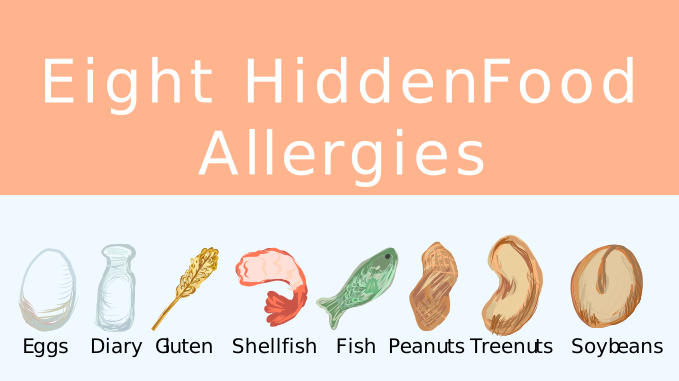
8 Different Food Allergies
A group of the eight major allergenic foods is often referred to as the Big-8 and comprises milk, eggs, fish, crustacean shellfish, tree nuts, peanuts, wheat and soybean. These foods account for about 90% of all food allergies in the United States and must be declared on any processed food according to the USA food allergen labeling act (FALCPA)1. In addition labeling of the Big-8 is mandatory according to EU, Canadian, Japanese and Australian / New Zealand regulations, all of which follow Codex Alimentarius recommendations. Allergic consumers may accidentally encounter problem foods as several of the Big-8 (e.g. eggs, milk, wheat, and soybean) are often used in processed products and can be "hidden".
Different Cuisines
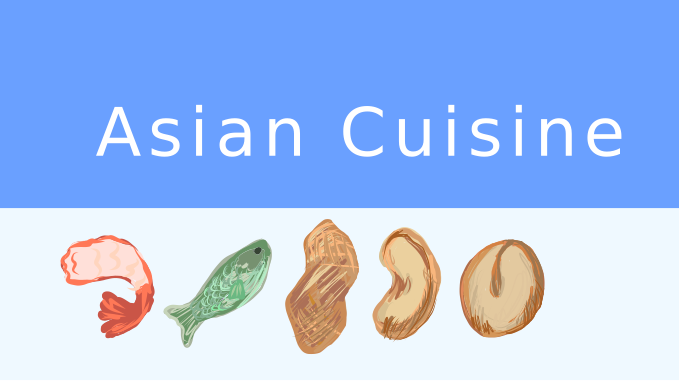
If you are a vegeterian who does not want to consume meat or dairy, East-Asian Cuisine is great! It's good to be cautious though, as cross contamination is prevalent in East-Asian cooking. They tend to use the wok for the whole day because of a natural process that happens to them called seasoning. The more your wok is used picking up flavors from various foods, the better the taste. If someone has a severe allergy, it would be a good idea to ask how they prepare their food. Asian restaurants may also adorn their dishes with sesame seed oil, or cook with peanut or treenut oil. A lot of sauce bases for Chinese, Japanese, and Korean dishes amongst others, use fish for its natural umami flavor. Interestingly, soy sauce, ubiquitous in Asian restaurants, is usually well tolerated by those with a soy allergy because the soy proteins are broken down by the fermentation process. Wheat is a larger problem in soy, tamari or fish sauce condiments because those can contain gluten proteins.

The emphasis on fresh, local cuisine gives the French a variety of vegetables to work with but salad dressings and vinaigrettes can be a hidden source for nut and seed oils and eggs. Expensive, hand-pressed oils -- walnut, almond and sesame, for example -- used for their intense flavors, can be more allergenic than the cheaper, refined oils because they contain more nut proteins. Mustard and mustard seeds, a common ingredient in French cooking, is a growing concern in France. A 2003 French study reported that mustard allergy accounts for 1.1 percent of food allergies in children, according to the journal Allergy.

Some of the most common spices are ground up and mixed into masalas as a flavorful base for vegetable and meat curries, rice and almost every other savory dish, include bay leaves, coriander, cardamom, fenugreek, ginger, garlic and turmeric. People with allergies to dairy products, peanuts and tree nuts should be wary of creamy curry sauces that often include cream and are thickened with a cashew or almond paste. Menu items with the word "malai" signal a creamy sauce. Lentils and legumes, a major source of protein in a country with a large vegetarian population, can also trigger an allergy. Allergies to chickpeas or garbanzo beans are prevalent in India, according to a 2001 study in the Annals of Allergy, Asthma, and Immunology.
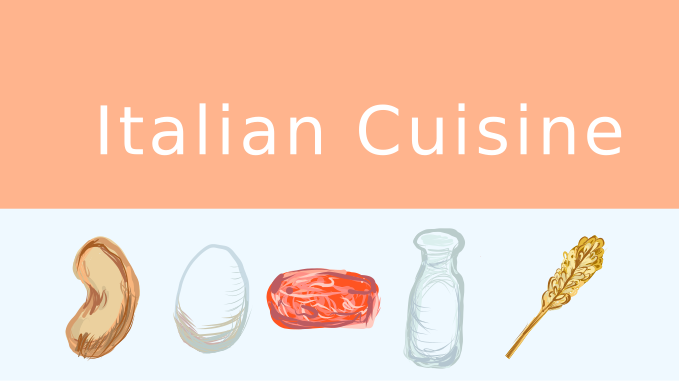
Italian food has become pervasive and evolved its own culture in the United States. While it may be difficult to imagine allergens lurking in a simple dish of spaghetti with tomato sauce, many common ingredients in Italian food can be highly allergenic. Cheese and dairy products, used liberally in Italian cooking, should be avoided by those allergic to dairy. Cross contamination can be a risk if fettuccini pasta, for example, were cooked in the same water as cheese ravioli. Breads and pastas are an important food and vehicles for sauce in Italian cooking and those with a wheat allergy or intolerance could feel excluded from the culture.
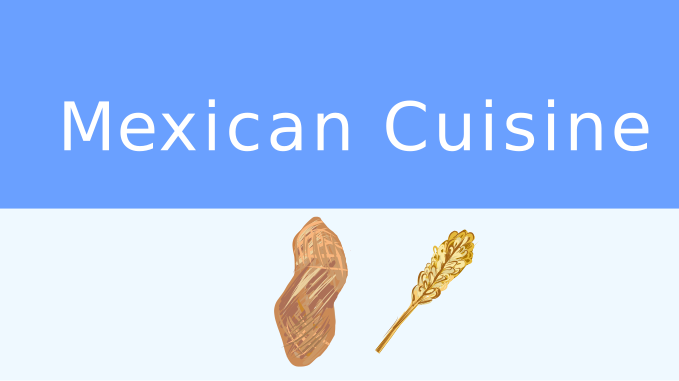
Because sauces and dips, such as guacamole, can vary in their ingredients, Doctors suggests finding out exactly what is in a sauce before eating it. For example, mole, a cocoa based sauce from the states of Puebla and Oaxaca typically served with turkey or chicken, uses a cornucopia of ingredients including chiles, cinnamon and garlic, and it may not be suitable for people with nut allergies because the sauce often contains nuts. Beans, or frijoles, used in Mexican food -- black beans or pinto beans -- are well tolerated by most people, even those for whom peanuts, soybeans, chickpeas or lentils may be a problem. And those with soy or wheat allergies should think twice before downing a shot of rum or tequila as they may contain those allergens.

One of the most prominent allergens in African cuisine is peanuts, often referred to as groundnuts. They are used in soups, stews and as sauces for meat and rice dishes. But African food can be friendly for those with a wheat allergy or intolerance. Millet, one of the staple starches in many parts of Africa, a cereal crop eaten like rice with stews or meats, is far removed from the wheat family and can be eaten by those with allergies. Cornmeal, another staple that has different names all across Africa, including ugali in Kenya, sadza in Zimbabwe and fufu in West Africa, is another starchy alternative for those with a wheat allergy.
Encompassing the foods from most of the countries in and around the Mediterranean Sea, Middle Eastern cuisine is known for earthy flavors balanced by citrus and herbs, with liberal amounts of olives and olive oil. But while they pack a lot of healthy omega-3 fatty acids, the seeds and nuts prevalent in Middle Eastern cooking may be the biggest allergy inducing culprits in the cuisine. Sesame seeds are particularly pervasive in Middle Eastern foods, whole, as oil or ground up into a thin sauce called tahini, which is found in many dishes and used as a dipping sauce for foods such as the spicy chickpea cakes known as falafel.